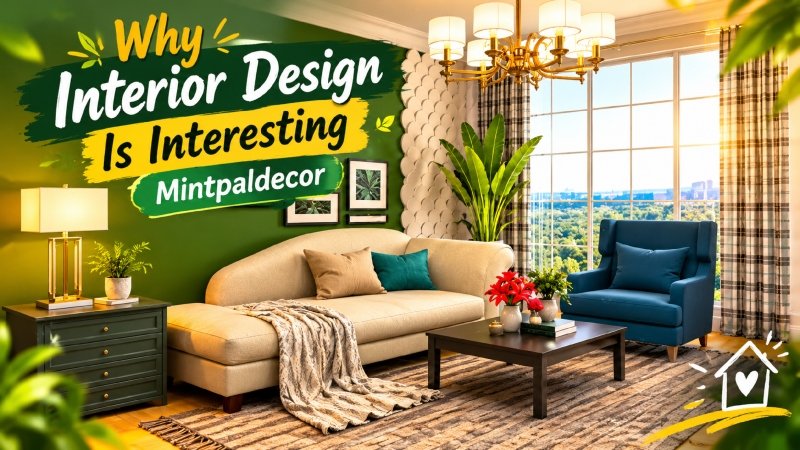
Most people meet interior design at a crossroads: a new apartment with awkward corners, a living room that never feels right, or a rental with landlord-beige walls. That moment of frustration is exactly why interior design is interesting. It takes a space that refuses to cooperate and reshapes it into something personal, functional, and genuinely enjoyable to live in. Why Interior Design Is Interesting Mintpaldecor
Mintpaldecor, a home design resource built for US homeowners and renters on real budgets, treats this subject differently. Instead of chasing luxury showrooms, Mintpaldecor interior design advice focuses on affordable, step-by-step improvements — seasonal color schemes, small layout changes, and creative home ideas that work in ordinary houses and apartments. This guide breaks down the importance of interior design, the interior design trends shaping 2026, and the concepts that make the whole craft so addictive. Why Interior Design Is Interesting Mintpaldecor?
Quick Answer
Interior design is interesting because it mixes art, psychology, and problem-solving in a single room. Color schemes change mood, space planning changes behavior, and lighting design changes how everything looks at 8 a.m. versus 8 p.m. Mintpaldecor frames interior design as a learnable skill, not a luxury, which makes every home improvement project feel achievable.
Quick Facts: Why Interior Design Is Interesting — Mintpaldecor Overview
|
Element |
Details |
| Core topic |
Why interior design is interesting, explained the Mintpaldecor way |
|
Focus areas |
Space planning, color schemes, lighting design, furniture arrangement |
| Best for |
Homeowners, renters, DIY beginners, design students, lifestyle bloggers |
|
Core idea |
Interior design is a learnable skill, not a luxury service |
| Popular 2026 styles |
Modern interior design, minimalist design, contemporary interiors |
|
Budget approach |
Small, affordable changes instead of full renovations |
| Reference bodies |
ASID, NKBA, and AIA guidance cited in plain text below |
What Makes Interior Design So Interesting?
Interior design is the art and science of shaping interior spaces so they support the people using them. The interesting part is how many different skills hide inside that single sentence. A designer reads a floor plan like a map, predicts how sunlight will move across a room, and still has to pick a paint color the whole household can agree on. Few hobbies blend logic and creativity this tightly.
The Psychology Behind Room Aesthetics
Rooms talk. A cluttered entryway raises your blood pressure before you have taken off your shoes, while cozy living spaces with layered textiles and warm lighting invite you to sit down and stay a while. Researchers and practitioner bodies such as the American Society of Interior Designers (ASID) have long connected daylight, lighting quality, and layout to mood and comfort. Once you notice how strongly a space shapes your behavior, you cannot unsee it — and that is the hook that turns casual home decor interest into a genuine passion.
Space Planning Turns Constraints Into Creative Puzzles
Every room hands you a restriction: a load-bearing wall, a radiator exactly where the sofa should go, a bedroom barely wider than the bed. Space planning is the discipline of turning those restrictions into a working layout, and it is where creative interior design gets genuinely fun. Furniture arrangement becomes a logic puzzle with a physical answer — angle the bed, float the sofa, carve a functional workspace out of a closet. Solving it feels less like decorating and more like winning a game.
Color Schemes and Lighting Design Do the Heavy Lifting
Color and light decide whether a room reads calm, energetic, cramped, or open — before anyone notices the furniture. A tight color scheme of three shades creates visual order out of mismatched belongings. Lighting design adds another layer entirely: ambient light for the room, task light for reading and cooking, accent light to highlight art or architecture. Rotate a lamp from a cool bulb to a warm one and watch the same corner feel like a different home. That instant, repeatable transformation never stops being satisfying.
Why Interior Design Is Interesting: Mintpaldecor’s Perspective
Mintpaldecor is a home and interior design platform that gives US homeowners and renters practical ideas for creating stylish, comfortable spaces on a reasonable budget. Its philosophy is refreshingly practical: start with the spaces that already appeal to you, learn the components of design one at a time, and improve a room in small, reversible steps. That approach removes the intimidation factor and proves the importance of interior design at any price point.
Creative Interior Design on a Real Budget
Mintpaldecor interior design advice centers on high-impact, low-cost moves: repainting one accent wall, swapping a light fixture, rearranging what you already own, and adding decorative elements season by season. Renters get renter-friendly versions of every idea — peel-and-stick options, freestanding pieces, and layout tricks that survive a security deposit inspection. A full renovation is optional; a thoughtful interior styling refresh is not.
The Mint Pal Aesthetic: Calm, Soft, and Natural
The Mint Pal look leans toward soft pastel hues, a minimalist design sensibility, and natural materials like wood, linen, and rattan. It sits comfortably between modern home decor and warmer contemporary interiors, which makes it easy to personalize. The takeaway for beginners is bigger than any single palette: a defined aesthetic gives every purchase a filter, and a filter is what separates intentional interiors from accidental ones.
Why Interior Design Is Interesting Mintpaldecor: Understanding the Key Differences
Interior design shapes how a space works; interior decoration shapes how a space looks. The two overlap constantly, but mixing them up is one of the most common knowledge gaps in home improvement content. Here is the breakdown.
|
Factor |
Interior Design | Interior Decoration |
| Core focus | Structure and function — layout, flow, built-in elements |
Surface styling — color, textiles, accessories |
|
Typical tasks |
Space planning, lighting plans, furniture arrangement | Selecting pillows, art, rugs, and decorative elements |
| Skills involved | Spatial logic, measurements, planning guidelines |
Color matching, interior styling, trend awareness |
|
Best moment |
Renovations, remodels, fixing functional problems | Seasonal refreshes, quick room makeovers |
| Budget level | Higher, project-based |
Lower, incremental |
Both matter. Design solves the problem you keep bumping into; decoration makes the solution feel like home.
The Real Benefits of Interior Design Beyond Good Looks
The benefits of interior design go far past a pretty photo. A planned room wastes less square footage, cleans faster, and supports the routines actually happening inside it. Good lighting reduces eye strain in a home office. A kitchen planned around work zones — sink, stove, refrigerator — saves hundreds of wasted steps a week, which is why the National Kitchen and Bath Association (NKBA) publishes detailed planning guidelines for clearances and layouts. Even resale value plays a role: buyers consistently pay more for homes where functional spaces feel obvious and effortless.
There is a wellbeing angle too. Organizations including the American Institute of Architects (AIA) and ASID have invested years of research into how built environments affect stress, focus, and rest. In plain terms: a comfortable living environment is not a luxury purchase. It is daily infrastructure for your mood.
Modern Interior Design Trends Shaping 2026 Homes
The current wave of interior design trends favors warmth over sterility. Warm minimalism — clean lines softened by wood tones, textured walls, and curved shapes — continues to dominate modern interior design searches. Personalized interiors are rising just as fast: collections of real objects, family art, and thrifted pieces that no catalog can replicate. Sustainability has moved from buzzword to baseline, with reclaimed materials and buy-less, buy-better thinking shaping purchasing habits.
Two quieter shifts deserve attention. First, multifunctional rooms are now standard, not exceptional — guest rooms that double as offices, dining corners that serve as homework stations. Second, layered lighting is finally getting the respect it deserves, with dimmable ambient light and statement fixtures replacing the single harsh ceiling bulb. None of these trends require a contractor, which is exactly why they spread so fast among DIY home improvement enthusiasts.
Your First Room Makeover: A Simple Step-by-Step Checklist
Why Interior Design Is Interesting Mintpaldecor concepts only matter once they survive contact with a real room. This sequence keeps a first makeover organized and affordable.
|
Step |
Action | Pro Tip |
| 1 | Define the room’s single main job |
One primary function per room beats five vague ones |
|
2 |
Measure everything, then sketch the floor plan | Include window and door swings before buying furniture |
| 3 | Choose a three-color scheme |
60% dominant, 30% secondary, 10% accent |
|
4 |
Layer three light sources | Ambient plus task plus accent, all on warm bulbs |
| 5 | Arrange furniture around one focal point |
Float the sofa off the wall to open the room |
|
6 |
Add decorative elements last | Art and accessories should echo the accent color |
| 7 | Live with it for two weeks, then adjust |
Real use reveals what the plan missed |
Common Interior Design Mistakes Beginners Make
Beginners rarely lack taste; they lack sequence. The most frequent errors are predictable: pushing every piece of furniture against the walls, relying on one overhead light, buying decor before measuring, and chasing trends that clash with the room’s actual architecture. The fix for all of them is the same discipline Mintpaldecor teaches — plan the function first, establish the color scheme and lighting next, and only then layer in interior decoration ideas. Slow is fast. Following this sequence helps the room feel thoughtfully planned and visually cohesive from the start.
FAQs About Why Interior Design Is Interesting
Why Interior Design Is Interesting Mintpaldecor as a hobby?
It is interesting because every project combines logic, aesthetics, and psychology in a space you use daily. You get visible, livable results from each decision, and the learning curve rewards curiosity faster than most creative hobbies.
What is Mintpaldecor known for in interior design?
Mintpaldecor is known for practical, budget-friendly home design advice aimed at US homeowners and renters. Its content emphasizes step-by-step improvements, seasonal color palettes, and small layout changes that avoid full renovations.
What are the key advantages of using interior design in a home?
The main benefits are improved functionality, better mood and comfort, efficient use of space, and stronger visual appeal. Well-planned rooms also tend to support daily routines and can add long-term value to a home.
What sets interior design apart from interior decoration?
Interior design addresses structure and function, including layout, lighting plans, and space planning. Interior decoration works on the surface layer — color, textiles, and accessories — and usually comes after the design decisions are made.
Which interior design styles and trends are gaining popularity in 2026?
Warm minimalism, personalized interiors, sustainable and natural materials, multifunctional rooms, and layered lighting design lead current searches. All five trends work on modest budgets without structural renovations.
How can renters improve their interiors without making permanent changes?
Renters can rearrange furniture, use peel-and-stick backsplashes, swap light fixtures and hardware, add rugs and curtains, and style with removable decorative elements. Every change stays reversible and deposit-safe.
How does the 60-30-10 rule work when planning an interior design color scheme?
The 60-30-10 rule divides a room’s color scheme into 60% dominant color, 30% secondary color, and 10% accent. It is a simple formula that keeps even bold palettes feeling balanced instead of busy.
How do I find interior design inspiration for my home?
Start with the rooms you already love — in homes, hotels, or saved photos — and name what works: the lighting, the palette, the layout. Sources like Mintpaldecor organize inspiration by practical components of design, which makes ideas easier to apply.
Is modern interior design the same as contemporary interiors?
No. Modern interior design refers to a specific style with clean lines and roots in early twentieth-century movements. Contemporary interiors describe whatever is current right now, so the term changes as trends change.
Final Thoughts
Why interior design is interesting comes down to one thing: it is creativity with consequences you can feel every single day. A color scheme is not abstract art — it is how your bedroom greets you at midnight. Space planning is not a diagram — it is whether your morning routine flows or collides. Mintpaldecor’s biggest lesson for US homeowners and renters is that this skill belongs to everyone willing to observe, plan, and adjust one small change at a time. Pick one room. Pick one wall. Start there, and the rest of your home will start making suggestions on its own.
visit llbloghomey for more details.