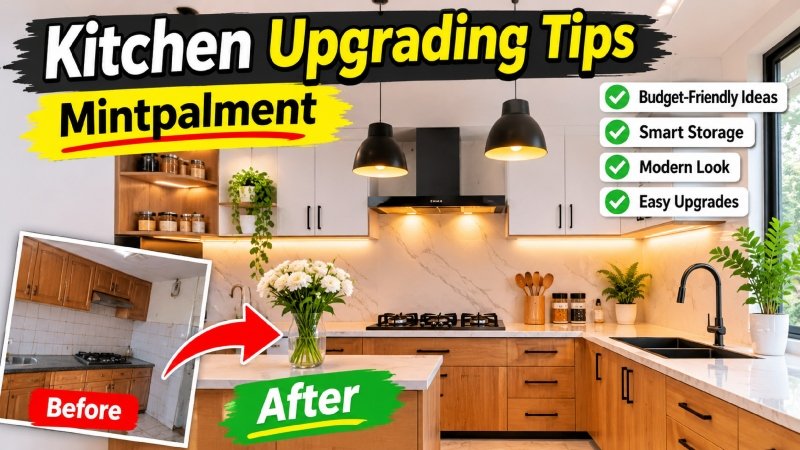
These kitchen upgrading tips mintpalment focus on the upgrades that fix how the room works and looks every day: refreshed cabinets, better lighting, durable counters, and a few well-chosen details. A complete overhaul is seldom necessary to achieve that. Start with what bothers you most, fix the basics first, and spend money where you touch and see the kitchen most.
You may have come across this phrase in online guides. It isn’t an established industry term, but the idea behind it is sound: make purposeful, budget-aware improvements instead of ripping everything out. This guide follows that approach.
Kitchen Upgrading Tips Mintpalment: Start With a Plan, Not a Shopping Cart
Most disappointing kitchen projects share one problem: people buy first and think later. Spend an hour on the following before you spend any money.
Identify your real pain points. Walk through a normal day of cooking. Where do you run out of counter space? Which cabinet do you dread opening? Is the room too dim at night? Write down five problems and rank them. Your top three are your upgrade list.
Set a budget with a buffer. Set aside roughly 10 to 15 percent beyond your estimate for surprises, such as a damaged wall behind old backsplash tile or a plumbing fitting that doesn’t match your new faucet.
Decide what’s DIY and what isn’t. Painting, swapping hardware, and installing peel-and-stick backsplash are realistic for most beginners. Electrical work, gas lines, and major plumbing changes call for licensed professionals, and many areas require permits for them. Check your local requirements before you start.
Refresh Your Cabinets First
Cabinets take up the most visual space in a kitchen, so improving them changes the whole room. If the boxes are solid and the layout works, you can often avoid replacing them.
Paint or refinish
With just the cost of supplies and a bit of patience, painting your cabinets can make them look brand new. However, how well you prep the surface will determine if the finish actually holds up. Clean off kitchen grease thoroughly, lightly sand, use a bonding primer, and finish with a durable cabinet-grade paint.For houses built prior to 1978, make sure to check for lead paint before you start sanding.Disturbing it can create a health hazard, and the EPA provides guidance on safe practices.
Replace hardware
New pulls and knobs are among the cheapest changes you can make. Measure the distance between existing screw holes before buying so the new hardware fits without drilling. Choose one finish, such as matte black, brushed brass, or brushed nickel, and repeat it on your faucet and lighting for a cohesive look.
Refacing versus replacing
| Option | Best for | Trade-off |
| Paint and new hardware | Sound cabinets with dated finishes | Takes time; won’t change layout |
| Refacing (new doors and drawer fronts) | Good boxes, worn or outdated doors | Costs more than paint |
| Full replacement | Damaged cabinets or a layout that doesn’t work | Highest cost and disruption |
If the cabinet boxes are structurally sound, refacing or painting typically gives the best return for the money.
Improve Lighting Before Anything Else Fancy
Lighting changes how every other upgrade looks, and a dim kitchen feels dated no matter how new the finishes are. Aim for three layers:
- Ambient lighting: overall room light, such as recessed lights or a ceiling fixture
- Task lighting: focused light where you work, especially under upper cabinets
- Accent lighting: pendants over an island or lights inside glass-front cabinets
Under-cabinet LED strips or bars are a practical choice. They light the counter directly so you aren’t working in your own shadow, and many plug-in or hardwired-ready kits are friendly to confident DIYers. For color temperature, warm to neutral white (roughly 2700K to 3500K) is commonly recommended for kitchens because it flatters wood and food without feeling clinical. Keep the same color temperature across fixtures so the room doesn’t look patchy.
If an upgrade involves new wiring or moving a fixture, hire a licensed electrician.
Choose Countertops That Match How You Cook
Countertops take daily abuse, so durability matters more than trends. Here’s a plain comparison of common materials:
| Material | Strengths | Watch out for |
| Quartz (engineered stone) | Durable, low maintenance, consistent patterns | Can be damaged by high heat; higher cost |
| Granite | Heat-resistant, natural variation | Typically needs periodic sealing |
| Butcher block | Warm look, budget-friendly, repairable by sanding | Needs oiling or sealing; sensitive to standing water |
| Laminate | Lowest cost, many styles | Seams and edges can show wear; less heat-tolerant |
If you cook heavily, prioritize heat and stain resistance. If budget is tight, quality laminate or butcher block on an island can add warmth without a large expense. Always ask for a physical sample and look at it in your own kitchen light before deciding.
Update the Backsplash and Walls
A backsplash protects the wall and adds personality. Ceramic or porcelain tile is long-lasting and easy to wipe down. For renters or tight budgets, peel-and-stick tile can improve the look quickly, though it generally won’t match the durability of real tile, especially near a stove. A fresh coat of washable paint on the walls, in a scrubbable finish like satin or semi-gloss, also helps the room feel cleaner.
If you like soft color accents, a muted green or sage palette is a popular way to bring freshness without overwhelming the space. Test any bold color on a small area first and live with it for a few days.
Upgrade Appliances Strategically
Appliances are usually the biggest line item, so replace them selectively rather than all at once.
- Replace what’s failing or inefficient first. A refrigerator or dishwasher running constantly costs more over time than its sticker price suggests.
- Look for the ENERGY STAR label when buying, which indicates the product meets federal efficiency guidelines.
- Match finishes where you can. Mixed stainless, black, and white appliances can make a kitchen look disjointed. If you replace one at a time, choose a finish you can continue with.
- Measure twice. Check cabinet openings, door swing, ventilation, and electrical or gas requirements before ordering.
A quiet, effective range hood is also worth considering. Good ventilation protects your cabinets and air quality.
Don’t Skip the Small Upgrades
Small details often make a kitchen feel finished:
- A single-handle pull-down faucet that is easy to use and clean
- A deeper or better-designed sink with a bottom grid or accessories
- Drawer dividers and pull-out organizers to use space better
- Soft-close hinges for a quieter, more polished feel
- A durable, easy-to-clean floor mat or runner in front of the sink
These cost little compared with big renovations and improve daily use right away.
A Sensible Upgrade Order
If you’re not sure what to do first, follow this order for kitchen upgrading tips mintpalment projects to avoid most rework:
- Fix any problems: leaks, damaged flooring, poor ventilation
- Handle electrical or plumbing changes
- Update lighting
- Refresh or reface cabinets
- Install counters and backsplash
- Replace appliances as needed
- Finish with hardware, paint touch-ups, and accessories
Doing messy or structural work first keeps you from damaging new finishes later.
Common Mistakes to Avoid
Following trends over function. A very trendy color or tile may date quickly. Choose a neutral base and add trends through easy-to-change items like paint, hardware, or décor.
Spending on looks while ignoring storage. A beautiful kitchen that lacks storage will frustrate you daily.
Skipping samples. Colors and materials look different online than in your home.
Underestimating prep time. Cabinet painting, in particular, takes several days for proper drying and curing.
DIY on regulated work. Gas, major electrical, and structural changes should go to licensed professionals.
Frequently Asked Questions
What is the most affordable way to give your kitchen a fresh, updated look?
Paint, new cabinet hardware, a better faucet, and improved lighting give the biggest visual change for the lowest cost. These are also manageable for most DIYers.
Is “mintpalment” a real kitchen design style or brand?
It isn’t a recognized design style, brand, or standard that I could verify. It appears in some online articles as a loose label for purposeful, budget-conscious upgrades. Use the practical advice, not the label, when planning your project.
Should I upgrade cabinets or countertops first?
Usually cabinets, since they have the larger visual impact and countertops need to fit the final cabinet layout. If your cabinets are staying and your counters are damaged, counters may come first.
Do kitchen upgrades increase home value?
Smaller, well-executed updates often make a home more appealing to buyers, but returns vary by market and quality. Talk with a local real estate agent before spending with resale in mind.
Is it possible to improve my kitchen without undergoing a complete renovation?
Yes. Refreshing cabinets, lighting, backsplash, and hardware can transform the room without moving walls or plumbing.
When should I hire a professional?
Hire licensed help for gas lines, new circuits or wiring, major plumbing changes, structural work, and anything requiring a permit in your area.
Conclusion
The best kitchen improvements begin by understanding your daily needs and how you use the space. Fix problems first, improve lighting, refresh cabinets, choose durable surfaces, and replace appliances selectively. Save the trendy touches for easy-to-change details. Whether you follow these kitchen upgrading tips mintpalment or simply call it smart planning, the principle is the same: spend where it improves daily life, the principle is the same: spend where it improves daily life, skip what doesn’t, and do the work in an order that protects your investment.
visit for more details.