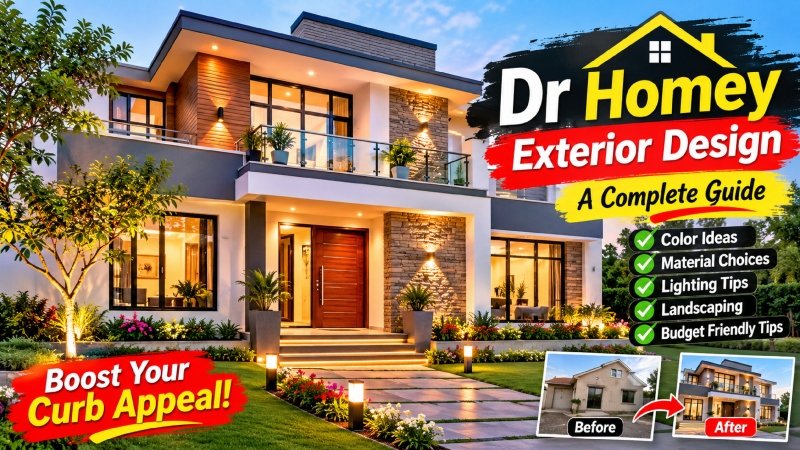
Dr Homey exterior design is a search phrase for homeowners who want clear, practical guidance on improving the outside of their house. The best approach is to work in a sensible order: assess what you have, choose a style, lock in colors and materials, then layer in lighting and landscaping. Done this way, you improve curb appeal, protect the structure, and avoid expensive do-overs.
This guide walks through each step in plain terms so you can plan with confidence, whether you are repainting a front door or redoing an entire facade.
What “Dr Homey Exterior Design” Really Means
The phrase appears across many home-tips websites, and there is no official standard or certification behind it. Treat it as shorthand for a homeowner-friendly mindset: diagnose first, then treat. That means looking at the condition of your home before choosing finishes, and prioritizing function (weatherproofing, drainage, safety) before decoration.
If you are hiring someone for exterior work, judge them on licensing, insurance, references, and past projects rather than on a name or tagline.
Start With a Home Exterior Assessment
Before you pick a single paint chip, walk around your house and note what needs attention. Do this in daylight, ideally after rain, when drainage problems are easier to spot.
Check the Structure and Weatherproofing
Look at the roof for missing, curled, or stained shingles. Check gutters for sagging or clogs, and make sure downspouts carry water away from the foundation. Inspect siding for cracks, warping, or soft spots, and look for peeling paint or gaps around windows and doors.
Note What Is Working
Not everything needs replacing. A solid brick wall, a good roof, or mature trees may be assets to design around. Keeping what works is one of the simplest ways to stay within budget.
Choose a Style That Fits Your Home
The most attractive exteriors respect the architecture underneath. A few common examples:
- Modern: clean lines, large windows, simple materials, and a restrained palette.
- Traditional or colonial: symmetrical layouts, classic trim, and balanced proportions.
- Farmhouse: porches, board-and-batten siding, and warm, welcoming details.
- Ranch: low rooflines and horizontal emphasis, which pair well with natural textures.
You do not need to copy a style exactly. The goal is consistency, so the door, windows, lighting, and landscaping all feel like they belong to the same house.
Build a Color Palette That Works
Color changes the look of a home more quickly and affordably than almost any other update. A reliable palette uses three layers.
- Main color for the siding or walls.
- Trim color for window frames, fascia, and corners.
- Accent color for the front door, shutters, or small details.
Work With Fixed Elements
Your roof, brick, stone, and driveway are hard to change, so choose colors that complement them. If your roof has warm brown tones, for example, cool gray siding can clash, while cream or warm taupe usually blends better.
Test Before You Commit
Paint large samples on more than one wall and check them in morning, midday, and evening light. Colors shift dramatically outdoors, and a shade that looks calm on a small card can feel much stronger across a whole facade. Also check your neighborhood or HOA guidelines, which sometimes limit color choices.
Pick Materials Based on Climate and Maintenance
Looks matter, but so do upkeep and local weather. The table below summarizes general tradeoffs for common exterior materials.
| Material | General Look | Maintenance | Good Fit For |
|---|---|---|---|
| Brick | Classic, solid | Low | Traditional homes, long-term durability |
| Fiber cement siding | Clean, paintable | Low to moderate | Many climates, versatile styles |
| Vinyl siding | Simple, uniform | Low | Budget-conscious updates |
| Natural wood | Warm, textured | High | Accent areas, cottage and farmhouse looks |
| Stone veneer | Textured, upscale | Low | Entryways and foundation accents |
| Stucco | Smooth, sculpted | Moderate | Warm, drier regions |
Costs, lifespans, and performance vary by brand, installation quality, and region, so get local quotes and check manufacturer warranties. Limiting yourself to two or three materials keeps the facade from looking busy.
Make the Entry the Focal Point
Visitors naturally look at the front door, so it deserves attention. A bold door color, quality hardware, and clearly visible house numbers can lift the whole exterior at a modest cost.
Frame the entrance with simple planters, a small overhead canopy, or a porch if space allows. Keep the area clear of clutter, and make sure the path to the door is well lit and level for safety.
Windows, Roofing, and Trim Details
Windows give the facade its rhythm. Consistent shapes and well-proportioned trim create balance, while mismatched styles can look accidental. Dark frames tend to feel modern, and white frames often feel crisp and traditional.
The roof covers a large share of what people see, so its color should harmonize with your siding. If the roof is near the end of its life, address it before painting or landscaping, because repairs later can damage new finishes.
Use Lighting to Improve Looks and Safety
Exterior lighting works best in layers rather than as one bright fixture by the door.
- Entry lighting for a clear, welcoming approach.
- Path lighting to guide guests and prevent trips.
- Accent lighting to highlight textures, trees, or architectural features.
- Security lighting with motion sensors at side yards and rear entrances.
Warm white LED bulbs give a comfortable glow and use less energy. Choose fixtures rated for outdoor use, and keep their finish consistent with your door hardware and house numbers.
Landscaping That Frames the House
Plants soften hard lines and connect your home to its surroundings. A few principles keep things simple:
- Place taller plants near corners and shorter ones beneath windows.
- Repeat a few plant types and colors instead of using many different ones.
- Choose native or climate-appropriate plants, which usually need less water and care.
- Keep plants away from siding and foundations to reduce moisture and pest problems.
Define edges with mulch, stone, or metal borders for a tidy look. Repairing cracked walkways, resealing a worn driveway, and keeping the lawn neat often deliver a bigger visual change than people expect.
Consider Energy Efficiency and Sustainability
Exterior updates are a good time to improve performance. Better insulation behind new siding, energy-efficient windows, and reflective or cool roofing can help control indoor temperatures. Native plantings, mulch, and efficient irrigation reduce water use. If you are considering solar panels or rainwater collection, check local rules and incentives first, since availability varies by location.
Plan Your Budget and Order of Work
Protect the house first, then make it beautiful. For any dr homey exterior design project, a sensible sequence looks like this:
- Repairs: roof, gutters, drainage, damaged siding, and rot.
- Major materials: siding, windows, or doors if replacement is needed.
- Paint and trim.
- Lighting and fixtures.
- Landscaping and hardscaping.
- Finishing touches like planters, house numbers, and mailbox.
Set aside a contingency fund, since hidden damage often appears once old materials come off.
DIY or Hire a Professional?
Painting, planting, and swapping light fixtures are manageable for many homeowners. Roofing, structural repairs, electrical work, and large siding projects usually call for licensed professionals. If your home was built before 1978, lead paint rules may apply to renovation work, so use contractors who follow the EPA’s lead-safe practices. Also confirm whether your project needs permits.
Common Exterior Design Mistakes to Avoid
- Choosing colors without testing them outdoors in different light.
- Mixing too many materials or styles on one facade.
- Skipping repairs and painting over underlying damage.
- Ignoring maintenance requirements of high-upkeep materials.
- Forgetting lighting, which leaves good design invisible at night.
- Planting too close to the house or blocking windows and walkways.
Frequently Asked Questions
Is Dr Homey a real exterior design company?
I could not verify a specific company, license, or designer behind this name. The phrase appears mainly on home-tips and content sites, so confirm credentials, insurance, and reviews before hiring anyone.
What is the most affordable way to improve curb appeal?
Start with a fresh front door color, updated house numbers and light fixtures, trimmed landscaping, and a clean driveway and walkway. These changes are visible and relatively low cost.
How do I choose exterior paint colors?
Pick colors that complement your roof, brick, and stone, then test large samples in different light. Use a main color, a trim color, and one accent for a balanced result.
Which exterior material needs the least maintenance?
Brick and stone veneer generally need the least upkeep, with fiber cement and vinyl siding also considered low maintenance. Wood typically needs regular sealing or painting.
How long does an exterior makeover take?
It depends on scope. A paint, lighting, and landscaping refresh can take days or weeks, while siding, window, or roof replacement can take longer and depends on weather and contractor schedules.
Conclusion
Dr Homey exterior design, understood as a practical, step-by-step approach, comes down to a few reliable habits. Assess your home’s condition, choose a style that fits its architecture, test colors in real light, select materials that suit your climate, and layer in lighting and landscaping. Fix problems before decorating, set a realistic budget, and verify the credentials of anyone you hire. Follow that order and you will end up with an exterior that looks good, performs well, and holds its value over time.
visit for more details.