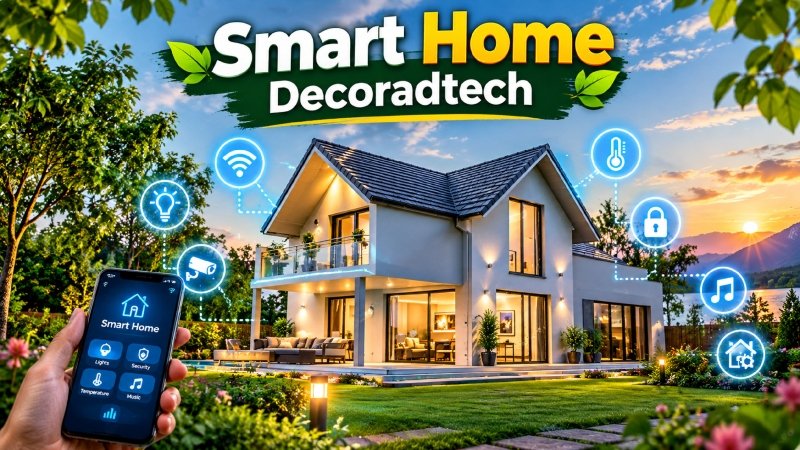
Smart home decoradtech is quietly reshaping how American homes look and function, and it has nothing to do with cluttered gadgets bolted to walls. The idea is simple: treat every connected device as a design element first and a piece of technology second. A thermostat that looks like a plastic afterthought undermines a beautiful room, while one styled in brushed metal completes it. This guide explains what decoradtech means, which upgrades deliver the biggest payoff, and how renters can join in without a deposit risk.
Quick Answer
Smart home decoradtech is the practice of designing interiors where connected technology — automated lighting, smart thermostats, voice-controlled home devices, and intelligent security — is styled as part of the decor. Rather than concealing smart devices, choose designs, colors, and placements that complement your interior, creating a cohesive and stylish home without an overly technical feel.
Smart Home Decoradtech at a Glance
Smart home decoradtech rewards people who plan the look before buying the hardware. The concept sits where interior design meets home automation, and its biggest wins come from decisions made before checkout, not after installation. The quick facts below summarize who the trend suits, what it costs to start, and which upgrades matter most, so you can explain the idea to a partner or a landlord in one minute.
|
Quick Fact |
The Short Answer |
| What it is |
Interior design that treats connected tech as decor, not an add-on |
|
Core rule |
Choose the style first, then buy devices that match it |
| Best first upgrade |
Automated lighting — biggest mood impact, lowest cost |
|
Renter-friendly? |
Yes, most wins need zero drilling or rewiring |
| Starting cost |
Impulse-buy friendly; add one device at a time |
|
Styles it suits |
Minimalist, mid-century, modern farmhouse, industrial |
| The 2026 shift |
Devices now ship in decor-grade finishes, fabrics, and frames |
What Exactly Is Smart Home Decoradtech?
Smart home decoradtech is the design discipline that merges interior styling with home automation, treating hardware as a material alongside paint, fabric, and wood. The term blends “decor” and “technology,” and it marks a mindset shift: gadget-first homes chase features, while decor-first homes chase atmosphere and let features serve it. In practice, automated lighting is chosen for the warmth it casts, a thermostat for its finish, and voice-controlled home devices are placed where they look deliberate. The discipline covers lighting, climate, security, sound, and connected accessories.
Why Home Automation Decor Is Winning in 2026
Home automation decor has moved from niche to mainstream for three practical reasons. Manufacturers finally design for interiors, shipping fabric-wrapped speakers, brass-finished thermostats, and displays that masquerade as framed art. Open floor plans put every device on display, so one ugly gadget now drags down the whole space. And homes themselves have become backgrounds — for video calls, social posts, and hybrid work — which raised the bar for how technology should look. Modern smart home design is simply how well-dressed homes are furnished now.
7 Smart Home Decor Ideas That Elevate Any Room
These smart home decor ideas work in almost any American home, and most need nothing more than an afternoon and a modest budget. Each one solves the same problem: making technology look chosen rather than installed. Pick the two that fit your space, and build from there, because every good smart interior was assembled one deliberate decision at a time.
- Match finishes, not brands. Pick one metal and one texture — matte black, brushed brass, walnut — and repeat them.
- Build a charging drawer. Turn a drawer near your entrance into a discreet charging spot to keep cables off countertops and maintain a neat, clutter-free space.
- Hang a picture-frame display. Digital art frames show paintings by day and family photos by night.
- Layer automated lighting scenes. Program warm, dimmed evening scenes so lamps carry the mood.
- Dress your hubs. Style voice speakers on trays or bookshelves so they read as objects, not gadgets.
- Disguise the eyesores. Tuck routers into woven baskets and choose cameras shaped like decor.
- Upgrade to statement pieces. Automated window blinds, intelligent mirrors, and concealed TV units often impress guests the most.
Room-by-Room Smart Interior Design
Smart interior design succeeds room by room, because each space has its own rhythm. A living room needs atmosphere, a bedroom needs wind-down support, and a kitchen needs hands-free help. The common thread is restraint: two or three thoughtful devices per room beat a dozen half-used ones. Rooms feel calm when the technology disappears into routine, and that is the standard every placement below hits.
Living Room: The Atmosphere Engine
The living room rewards automated lighting more than any other upgrade. Start with bulbs and portable lamps grouped by zone — sofa reading, media wall, entry — then assign each zone a scene: bright for cleaning day, warm and low for evenings. Add a smart display styled as a framed photo piece, and hide the streaming box in a ventilated cabinet. The goal is a room that shifts personality on command, without a visible wire.
Bedroom and Sleep Tech
Bedrooms benefit from quieter automation. A smart thermostat scheduled to cool slightly before bedtime supports deeper sleep, while bulbs that fade to amber at night protect your eyes from harsh white light. Choose a small, fabric-wrapped speaker for alarms and white noise, and keep screens out of sight. The best minimalist smart home interiors treat the bedroom as a tech-light zone: automation runs in the background so the room stays a place of rest.
Smart Home Decorating Tips for Renters and Small Budgets
Renters can capture most of the decoradtech effect without touching a drill. Battery and plug-in automated lighting systems install in minutes and move out with you. Peel-and-stick cable channels hide cords along baseboards, and removable mounting strips hold small cameras and sensors. Prioritize devices that live on existing fixtures — smart bulbs instead of new fixtures, smart plugs instead of rewired outlets. These smart home decorating tips cost less than one piece of furniture, yet they change how rooms feel.
Which Technology in Home Decor Belongs Where
Technology in home decor works best when every category has a defined job. The comparison below ranks the five core device categories by visual impact, best placement, and renter-friendliness. Read it before shopping, because the most common decoradtech mistake is buying a hero device — usually a hub or a camera — before deciding where it will live and what finish it needs. A thermostat in the hallway, lighting in the living room, security at the door: that mapping is the strategy.
|
Device Category |
Decor Impact | Best Placement | Renter-Friendly? |
| Automated lighting systems | High — transforms mood | Living rooms, bedrooms |
Yes (bulbs, portable lamps) |
|
Smart thermostats for modern homes |
Low profile, high comfort | Hallways, main floor | Mostly (no rewiring) |
| Voice hubs and smart displays | Medium — style the shelf | Kitchens, entryways |
Yes |
|
Intelligent home security systems |
Discreet cams, smart doorbells | Entrances, driveways | Yes (battery models) |
| Connected home accessories | High — statement pieces | Blinds, frames, mirrors |
Varies by product |
Smart Home Decor Mistakes That Cheapen a Space
The fastest way to ruin a decoradtech project is buying devices before defining the look. Mismatched finishes clash within weeks, exposed cables undo thousands of dollars of design, and screens glowing at full brightness turn a calm room into a casino. Avoid stacking redundant apps, and never place a camera where it dominates the room’s sightline. One deliberate decision — a single finish palette, one hidden-cable rule — prevents most of this.
Your Smart Home Decoradtech Checklist
Work through this checklist in order and you will finish with a home that feels designed, not assembled. The sequence matters: style decisions come first, purchases come second, installation comes last. Most people reverse that order, which is why so many smart homes feel random. Print the table and check items off.
|
Step |
Action | Why It Works |
| 1 | Photograph every room and circle visible tech |
You cannot fix clutter you have not seen |
|
2 |
Choose one finish palette for all devices | Mixed metals make homes look messy |
| 3 | Start with automated lighting |
Fastest visible win, easiest install |
|
4 |
Hide or style every cable | Cables are the number-one decor killer |
| 5 | Group devices by room and routine |
Scenes beat app juggling every time |
|
6 |
Buy one category per month | Spreads cost and prevents impulse clutter |
| 7 | Review placements after 30 days |
Daily comfort reveals the right positions |
Frequently Asked Questions About Smart Home Decoradtech
These are the questions homeowners ask most often about smart home decoradtech, covering cost, renting rules, placement, and resale. Every response begins with a clear and straightforward answer.
What is smart home decoradtech?
Smart home decoradtech is the practice of styling connected technology as part of your interior design rather than hiding it. It covers lighting, climate, security, sound, and accessories chosen to match your finishes and style.
How can renters use smart home decor ideas without drilling?
Choose battery, plug-in, and peel-and-stick products. Smart bulbs, portable lamps, removable cable channels, and strip-mounted sensors deliver most benefits, install in minutes, and leave no damage.
Are automated lighting systems worth it in small homes?
Yes, because lighting does the decorative heavy lifting in compact spaces. Layered scenes make one room perform as reading nook, office, and cinema, so you gain function without furniture.
Do voice-controlled home devices fit minimalist interiors?
They can, if you treat them as styled objects. Fabric-wrapped speakers sit naturally on shelves, and voice commands replace visible switches, reducing wall clutter. The minimalist rule is one hub per room.
Where should beginners start with technology in home decor?
Start with automated lighting, then a smart thermostat, then secure the entry. Lighting teaches you scenes and routines on the cheapest budget, and later devices join the same system instead of a new app.
How do I hide cables and devices in a smart interior?
Use a three-layer approach: route cables through channels or furniture, tuck power bricks into ventilated baskets, and style whatever remains as decor. Photographs of each corner reveal the cables your eye ignores.
Are smart thermostats for modern homes expensive to run?
No, they usually reduce running costs rather than raise them. Scheduling and occupancy sensors stop heating and cooling empty rooms, trimming wasted energy. The real decor consideration is placement and finish, not the bill.
Can smart home decor increase resale value?
Connected features are increasingly expected by buyers, and homes with tidy controls, layered lighting, and discreet security photograph better in listings. Treat it as a styling advantage that sells on impression.
Final Thoughts: Make Smart Home Decoradtech Disappear
Smart home decoradtech succeeds when it disappears — when guests feel the warmth of your lighting scenes without spotting a gadget. Start small, match finishes, hide cables, and let automation serve the atmosphere you want. Your home in 2026 does not need to look like a gadget showroom to behave like one. It needs intention, one palette, and devices chosen as carefully as your furniture.
visit llbloghomey for more details.